
Reviewed by Corey Branks, Owner and Director, Techsteel.
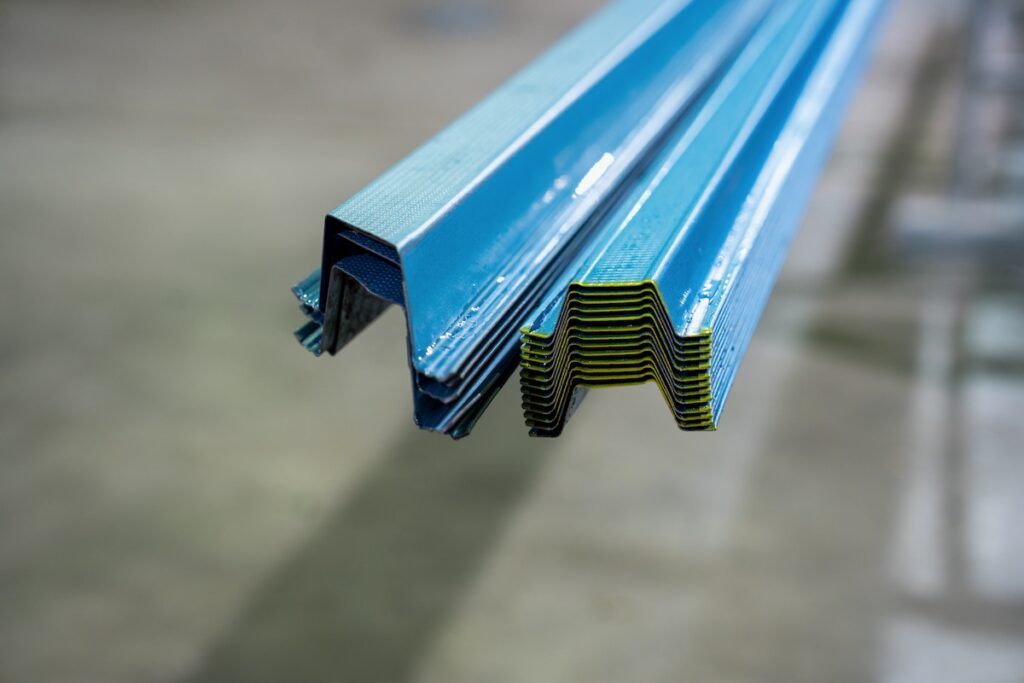
Top hat battens are roll formed steel sections with a profile shaped like an old fashioned top hat, with a raised centre and a flange on each side. They are fixed across trusses, rafters or studs to give a straight, even surface for roof sheets, tiles, ceilings and wall cladding. Common sizes run from 22 mm for ceilings to 40 mm and 64 mm for roofs, and the distance a batten can span depends on its size, steel thickness and wind class.
This guide explains the main top hat batten sizes, how to read a span table, where each size is used and how steel compares with timber, so you can order the right batten the first time.
What is a top hat batten?
A top hat batten is one type of batten, which is the general name for any strip fixed across the frame to carry a covering. All top hats are battens, but not every batten is a top hat, because battens can also be timber or other steel shapes. You may also hear brand names, such as Topspan, used to describe the same profile.
The shape is what makes it useful. The raised crown gives a firm, flat fixing face, while the flanges sit on the frame and take the screws. That simple profile is also why steel battens come in a range of depths, which brings us to sizes.
Top hat batten sizes
Top hats are described by their depth in millimetres and their base metal thickness (BMT), which is the thickness of the steel before coating. The table below shows the sizes commonly sold in Australia and what they are typically used for, based on published supplier ranges such as No1 Roofing and Building Supplies.
| Profile depth | Typical BMT | Typical use |
|---|---|---|
| 22 mm | 0.42 to 0.55 mm | Ceilings and internal wall linings |
| 40 mm | 0.48 to 0.75 mm | Residential roof battens for sheet and tile roofs |
| 50 to 64 mm | 0.75 to 1.15 mm | Longer roof spans, wall girts and heavier cladding |
| 75 to 120 mm | 0.75 mm and above | Sheds, patios and light purlin or girt work |
Techsteel manufactures steel top hat battens for roofs and ceilings in our Wangara workshop using TRUECORE steel.
Top hat batten spans and spacing
Once you know the size, the next question is how far it can span. The span is the distance between the supports the batten sits on, such as trusses or rafters, and spacing is the distance between one batten and the next. Both are set by the manufacturer’s span tables, which are worked out under AS/NZS 4600 for the wind class of the site.
How far can a 64mm top hat span?
The answer to how far can 64mm top hat span depends on the steel thickness and the span type. As a typical example, Pantex publishes spans for its 64 mm top hat at 0.75 mm BMT of 2,400 mm for a single span and 2,700 mm for a lapped span. Heavier 0.95 mm and 1.15 mm sections can span further. For comparison, a 40 mm top hat roof batten is often quoted with a maximum span of about 1,200 mm between trusses on standard homes (CADTech, typical), and a 22 mm ceiling batten is typically limited to about 1,200 mm (Lysaght Topspan 22, with 600 mm maximum spacing). Always use the current table for the exact product you are buying.
Wind class and roof type
Spans get shorter as wind loads get higher, so the same batten will span less in wind class N3 or N4 than in N1 or N2. Tile roofs are heavier than sheet roofs and need foot traffic to be considered, so they also call for closer spacing or a thicker batten. Your engineer or supplier will match the batten to the wind class set out under AS 4055.
How to read a top hat span table
Top hat battens span tables look busy, but they follow a simple pattern. Reading one comes down to four questions, asked in order.
First, find the profile and BMT you are considering, since each has its own rows. Next, choose the span type. A single span runs across two supports, a double or continuous span runs unbroken across three or more, and a lapped span overlaps two battens over a support. Continuous and lapped spans usually allow longer distances because the batten is stiffer. Then find the column for your wind class and batten spacing. The number where your row and column meet is the maximum span between supports.
Finally, check the notes. Most tables state the screw type, the minimum support thickness and whether the figures suit sheet or tile roofs. If your situation is not covered, ask the supplier rather than guessing.
Where top hat battens are used
With the right size chosen, top hats are used throughout a building. On roofs, 40 mm and larger battens carry metal sheeting or tiles across the trusses. Inside, 22 mm battens fix to the underside of trusses or joists to carry plasterboard ceilings. On walls, top hats act as cavity battens behind lightweight cladding such as AAC panels, or as girts on sheds and patios, where the larger sizes take on purlin duties. You can see our ranges on the roof battens and ceiling battens pages.
Steel vs timber battens
Many builders choose steel over timber for the same reasons they choose a steel frame. Steel battens stay straight, do not rot and offer nothing for termites or borers. They are also lighter to handle, and they are made to consistent dimensions, which helps keep a roof or ceiling flat. Timber is familiar and easy to cut on site, so it still has a place, particularly in renovations. Our article on steel wall battens vs timber compares the two in more detail.
Fixing and installation tips
Good installation protects the performance shown in the span table. Fix each batten at every support with the screw type the supplier specifies, which differs for timber and steel supports. Lap joints over a support where the table allows it, keep battens straight and parallel, and seal cut ends if the supplier recommends it. Before ordering, it helps to confirm the profile, BMT, span type, wind class, length and coating, so everything arrives ready to fix.
If you are framing the whole roof in steel, battens work hand in hand with the trusses below them. Our guide to what a roof truss is and how it works explains that side of the structure, and you can browse our full range of custom steel frame products or contact Techsteel for help choosing the right batten.
Frequently asked questions
What sizes do top hat battens come in?
Common depths are 22, 40, 50, 64, 75, 96 and 120 mm, in a range of steel thicknesses (No1 Roofing and Building Supplies, typical).
What is the span of a 22mm top hat batten?
Typically up to about 1,200 mm for ceilings, at a maximum spacing of 600 mm (Lysaght Topspan 22).
How far apart should roof battens be?
It depends on the roof sheet or tile, the batten and the wind class. The roofing manufacturer’s guide sets the spacing.
What is the difference between a top hat and a batten?
A top hat is a particular steel batten shape. Batten is the broader term, which also covers timber.
How far can a 64mm top hat span?
There is no single safe span for every 64 mm top hat. The allowable span changes with the profile, base metal thickness, whether the batten is single or continuous/lapped, the support arrangement and the wind class. Use the manufacturer’s span table for the exact product rather than choosing a span from the depth alone.
Does Bunnings sell top hat battens?
Large hardware and roofing retailers may stock standard batten profiles and lengths, but availability varies. For a framed roof, ceiling, wall or shed, the more important question is whether the profile, BMT, length, coating and span capacity match the engineered design. A fabricator can also supply project-specific lengths rather than relying only on off-the-shelf sizes.